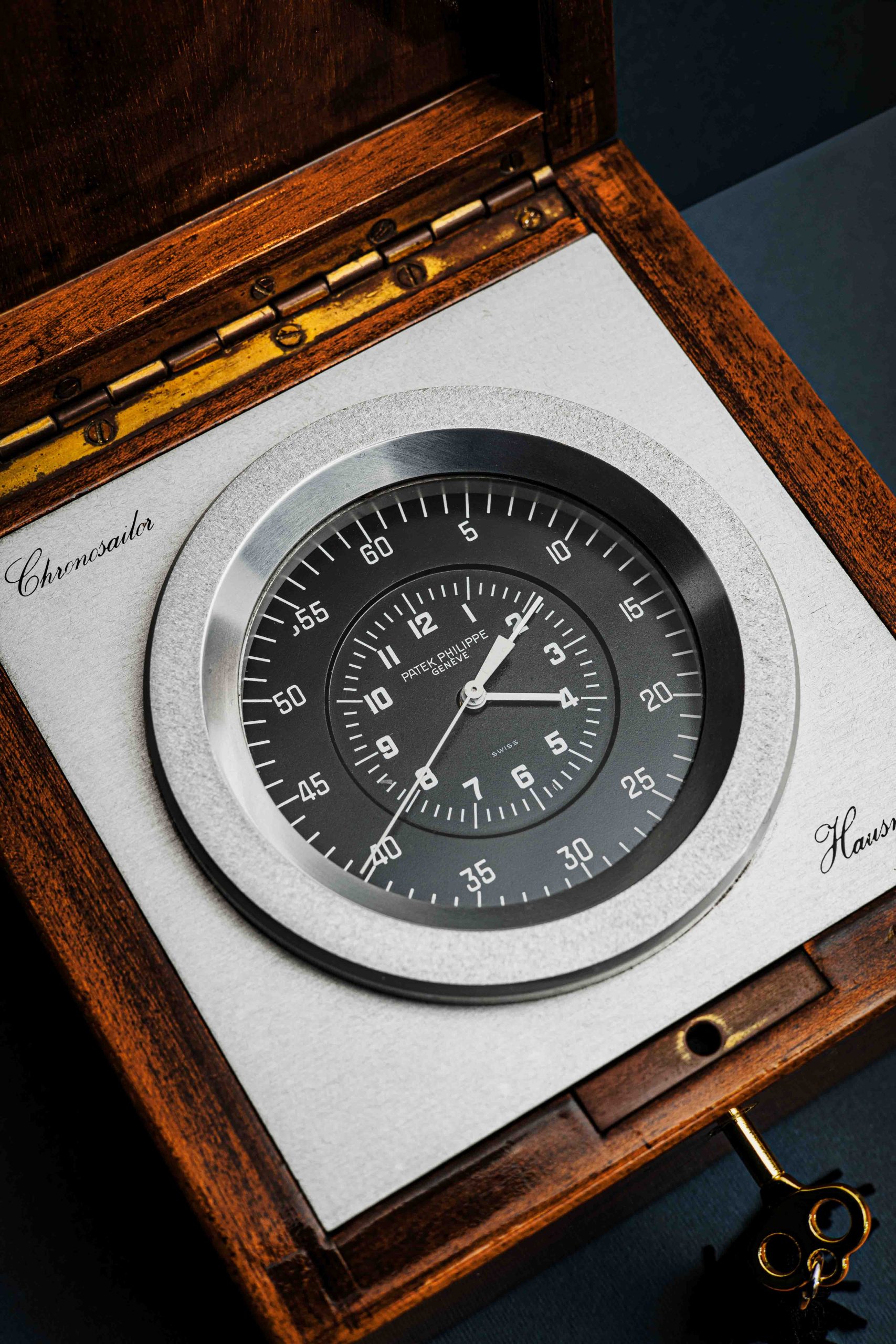
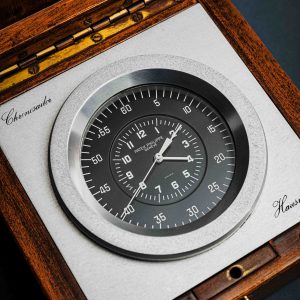
This is a truly special and rare object: a Patek Philippe “Chronosailor” (Reference 911). This is not a standard wristwatch, but a high-quality marine chronometer from the 1970s.
The Chronosailor was intended for professional shipping and serious yacht owners. At a time when GPS was not yet standard, such instruments were crucial for navigation at sea (determining longitude).
Movement: It contains an extremely precise electronic quartz movement (often the caliber E 1200). At that time, quartz was the absolute pinnacle of precision, far superior to mechanical movements.
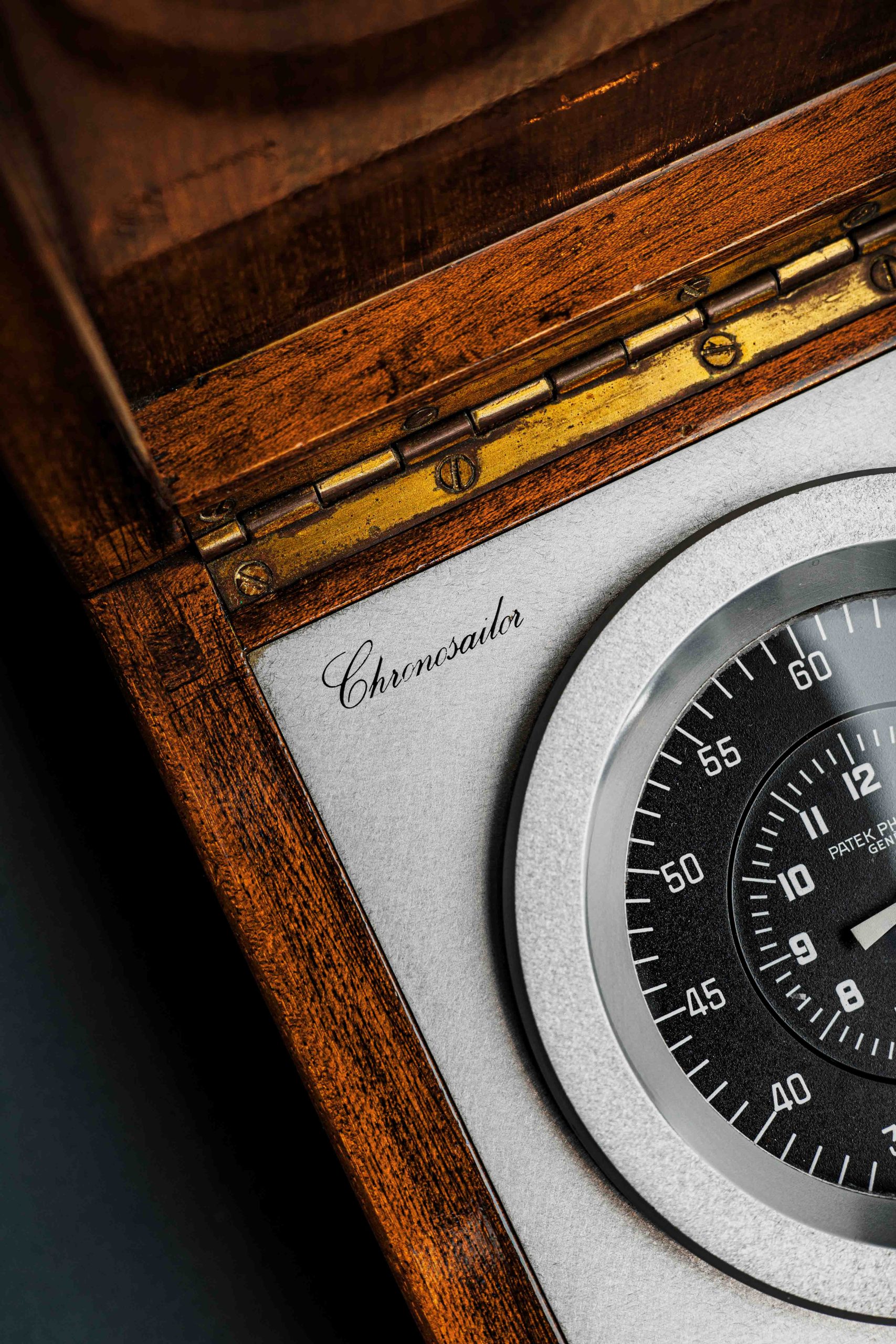
Design: The clock is mounted in a luxurious wooden case, usually mahogany or teak, with brass fittings. The dial design is functional and high-contrast for optimal readability under challenging conditions.
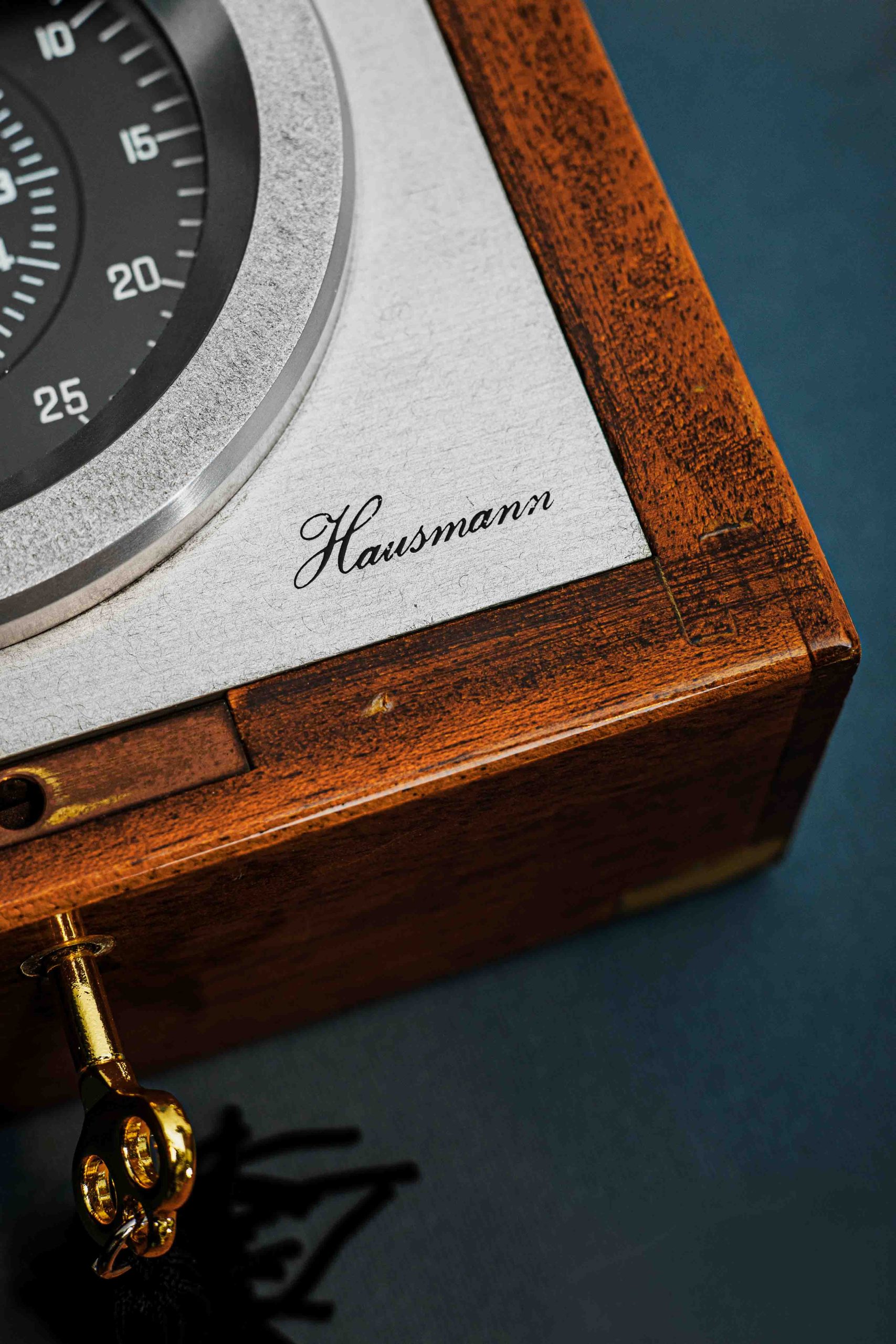
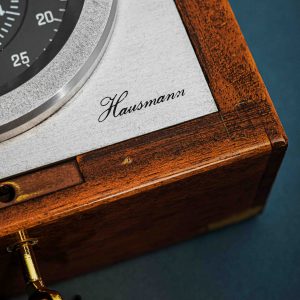
Hausmann & Co.: In the photo, you can see Hausmann’s signature in the lower right corner. This indicates that this example was sold through the renowned Roman retailer Hausmann & Co., one of the oldest and most prestigious watch houses in the world, which has worked closely with Patek Philippe since the 19th century.
Patek Philippe produced these instruments in very small numbers. Although collectors often focus on wristwatches, there is a growing market for Patek Philippe’s so-called “Electronic & Quartz Master Clocks” due to their technical perfection and historical significance.
Dual scale: The dial has a central hour indicator and a large outer ring for the seconds/minutes, essential for accurate timekeeping during navigation.
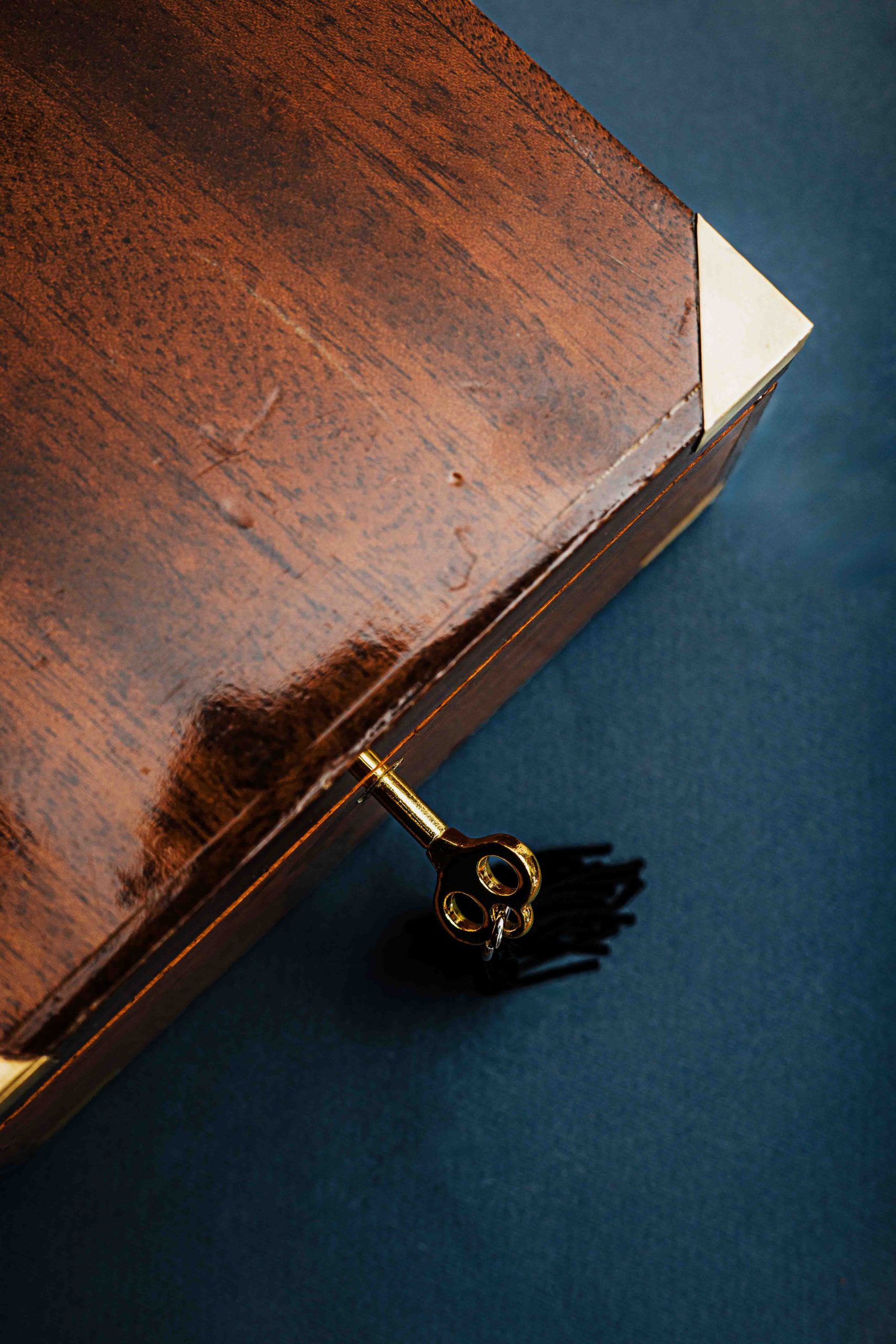
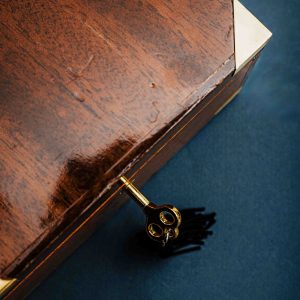
Condition: The example appears very well preserved, including the original winding/setting key, which is located at the bottom of the case.
The focus here is on the collaboration between the manufacturer and the retailer, as well as the physical operation of the instrument.
These are the most important details:
The elegant “Hausmann” inscription on the brushed metal plate is a so-called retailer signature.
Prestige: Hausmann & Co. is a legendary watch shop in Rome, located near the Pantheon. They have been an official partner of Patek Philippe since the 19th century.
Collectible Value: For collectors, a double signature (both the manufacturer and the seller) often adds extra value and history to an object. It tells us exactly where this chronometer was originally purchased.
The key is visible inside the wooden case.
Function: With this electronic quartz movement, the key is generally not used to wind a spring (as with mechanical clocks), but to lock the case or protect the time settings from unauthorized access.
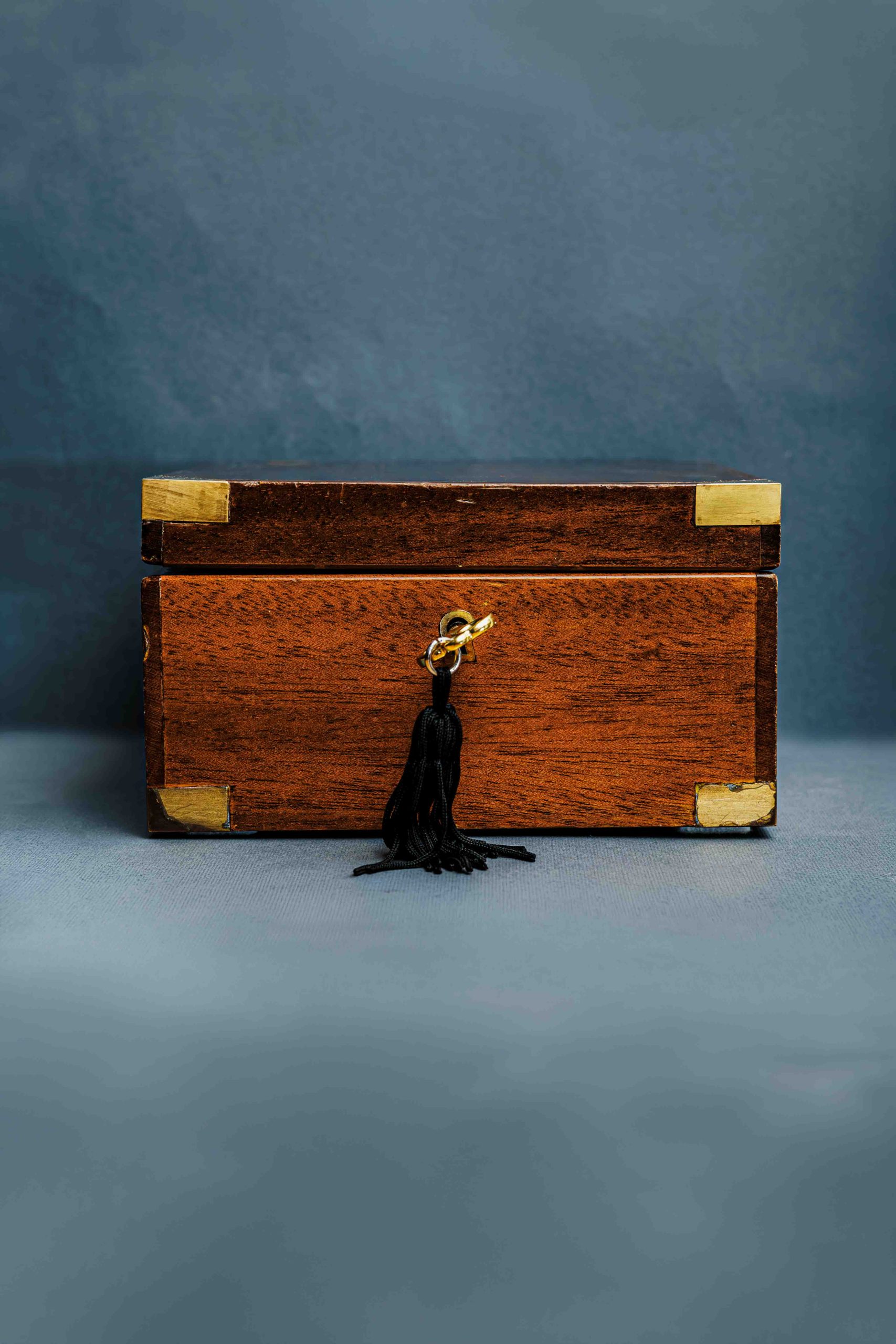
Woodwork: The case features beautiful dovetail joints on the corners, which testifies to the high-quality craftsmanship of the case. The wood (probably mahogany) has a deep patina befitting an instrument from the 1970s.
This piece clearly shows the contrast between the different textures:
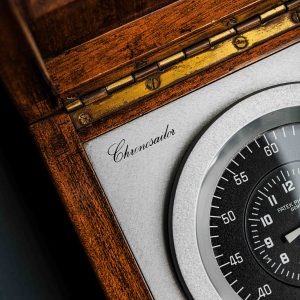
The brushed aluminum or steel plate minimizes reflections (important for legibility at sea). The polished metal ring surrounding the dial.
The warm, weathered wood of the exterior.
The case of this Patek Philippe Chronosailor is an essential part of the instrument and is crafted with the same precision as the movement itself.
Here are the key features of the case:
Wood: The case is crafted from high-quality solid wood, likely mahogany or teak. These woods were historically chosen for maritime instruments because of their natural resistance to moisture and temperature fluctuations.
Brass hardware: The corners are reinforced with brass brackets. This not only serves as decoration but also protects the vulnerable corners of the wood from impact and splitting during use on board a ship.
Craftsmanship: The detailed photo clearly shows the dovetail joints. This is a classic and very strong woodworking technique that indicates quality craftsmanship and durability.
The lock: The case is equipped with a functional lock with a characteristic key, often decorated with a black tassel. This allowed the chronometer to be locked to prevent unauthorized adjustments to the time (which was crucial for navigation).
Two-piece design: The case consists of a base in which the instrument is recessed and a hinged lid that fully protects the dial when not in use.
This unique ship’s clock is a jewel in our shop. Feel free to visit our shop and experience the magic of this ship’s clock, where not only time but also the journeys it has made across the world’s famous oceans come to life.