

IWC classic C-Model
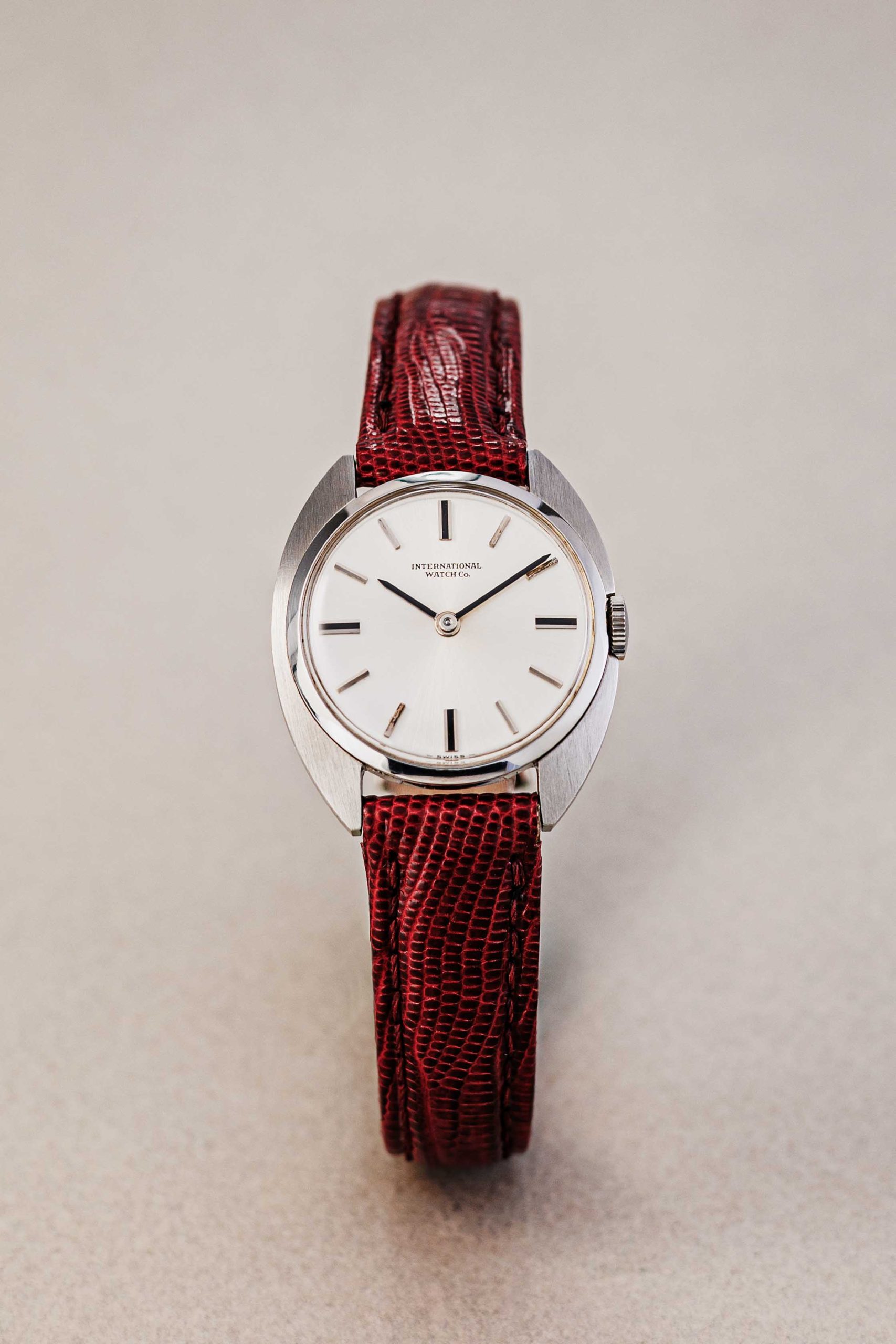
The IWC Classic C-Model: A masterpiece of form and innovation.
In the world of watches, every design tells a story about its time. The IWC Classic C-Model from 1978 is no exception. This watch exemplifies an era where tradition and futurism collided, captured in a case that proved to be both revolutionary and timeless.
The story of this watch actually begins in 1868, when the young American engineer Florentine Ariosto Jones from Boston moved to Switzerland. While most watchmakers settled in the French-speaking west, Jones chose the German-speaking town of Schaffhausen. Here, on the banks of the Rhine, he harnessed the raw power of the waterfalls to power his modern machinery. His vision was unique: combining Swiss craftsmanship with American production methods. He named his ambition the International Watch Company.
By the time this watch left the factory in 1978, the watch world was in a state of turmoil. The classic round watches of the 1950s, with their protruding lugs, gave way to a new, ergonomic ideal.
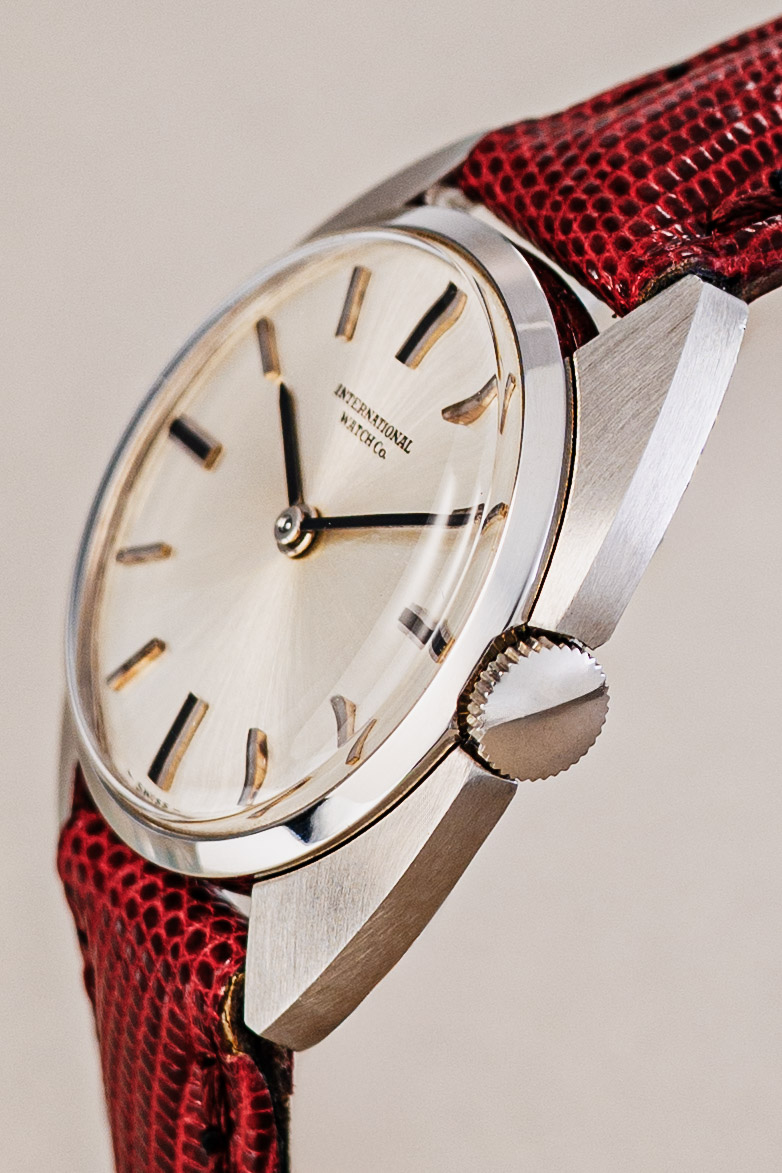
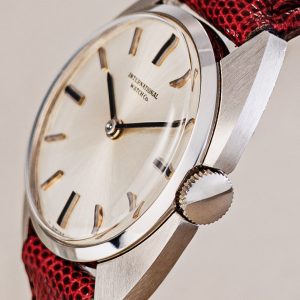
The characteristic C-shape, also known as the “tonneau,” was chosen. This design was not merely an aesthetic choice but a technical improvement in wearing comfort. By designing the case as a single, flowing whole, the watch followed the natural curve of the wrist. It sat flatter, was more stable, and felt more robust. While the movement remained understated, the broad “shoulders” of the case made the watch appear larger and more powerful on the wrist, a precursor to the modern “Jumbo” trend.
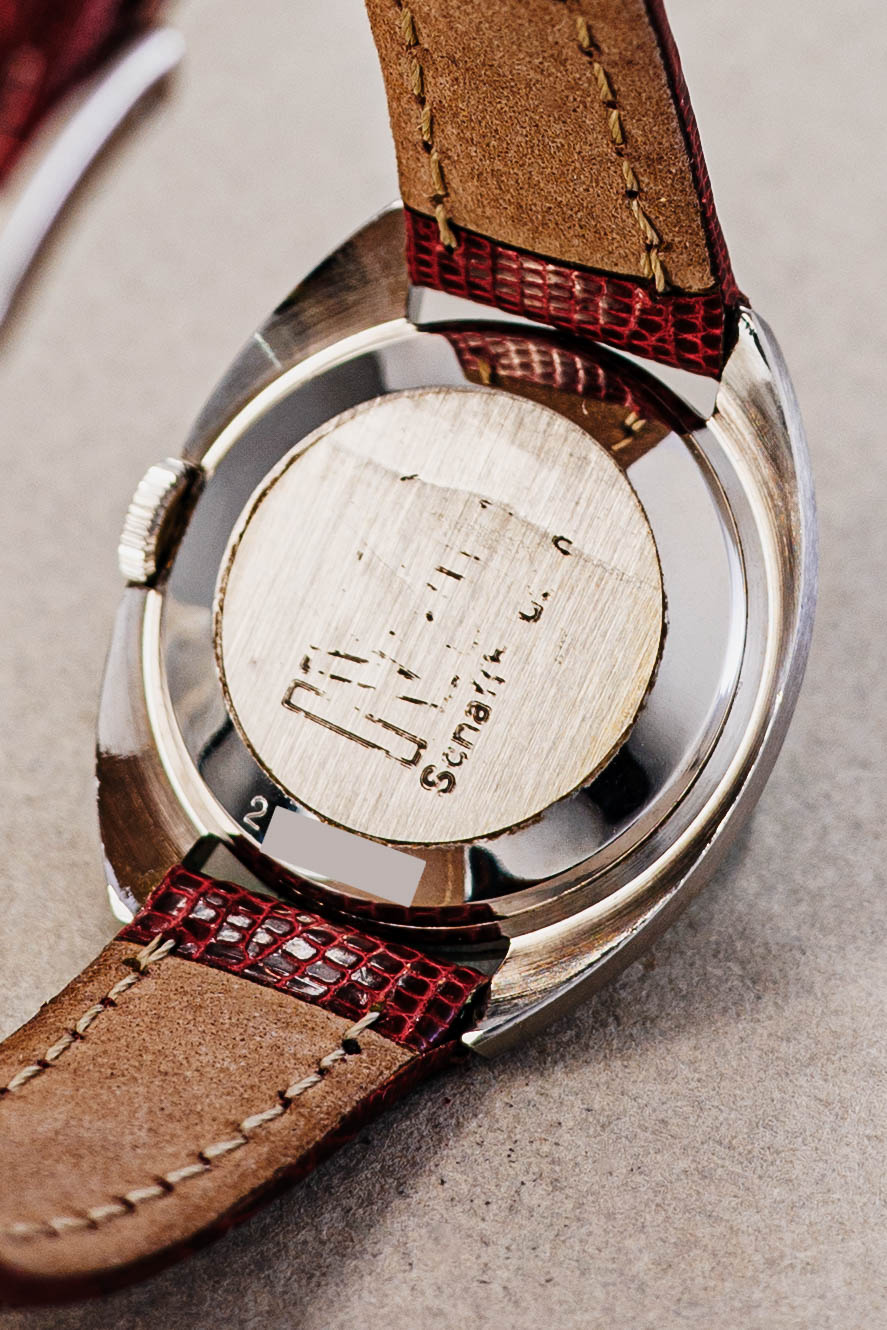
What makes this specific model (Ref: 2106327) so special is the finish. The stainless steel case features a technical masterpiece: a brushed “sunburst” finish on the sides. This creates a unique interplay of light that is simply impossible with a standard round case.
The dial exudes absolute tranquility. With its clean, applied indices and simple baton hands, there are no distractions. A baton hand (also called a stick hand in Dutch) is one of the most classic and minimalist hand shapes in the watch world. The name derives from the French word bâton, meaning “stick” or “staff.” The absence of a seconds hand or date window enhances the symmetry and “dress watch” aesthetic.
Combined with a beautiful leather strap, this steel instrument has a luxurious, almost regal appearance. It is the perfect blend of 1970s boldness and Schaffhausen reliability.
This watch is more than just a timepiece; it is a testament to the vision of Florentine Ariosto Jones and a paragon of Swiss perfection that remains relevant today.
Year
1978€ 1.750
Contact us
We’re here to help.
International Watch Company, better known as IWC Schaffhausen, was founded by American watchmaker Florentine Ariosto Jones in 1868. The company specialized in Aviation watches and is currently operating under the Richemont Group umbrella.
IWC introduced its first pilot’s watch in 1936. An inner rotating pointer could be used to keep track of take-off times and the escapement was anti-magnetic, to cope with the magnetic fields from the cockpit instruments.
In 1939, two Portuguese distributors ordered a large wristwatch with pocket watch movement and another iconic IWC line was born: the Portugieser. Today, particularly the dressy Portugieser chronographs are popular among IWC aficionados.
When Europe plummets into WWII, IWC is commissioned by both sides of the conflict to supply military watches. The two best-known examples are the Dirty Dozen field watches for the allies and the big pilot, known as Beobachtungsuhr or B-uhr, for the German Luftwaffe. The latter would form the design template for the later Big Pilot range.
Towards the end of WWII, IWC developed a new military movement, known as Cal. 89. When the war ends, the tough caliber is fitted to civilian watches. The Cal. 89 watches, many in classic Calatrava style, remain popular among collectors until today. In 1948, the Cal. 89 is fitted to the Pilot Mk XI, another popular vintage reference.
1955 Saw the introduction of another influential IWC model: the Ingenieur. IWC used its expertise in magnetic resistance to manufacture a watch for engineers and scientists, working with magnetic fields. This is two years after Rolex introduced the Milgauss for the same clientele.
In 1967, IWC branches out into water sports. The Aquatimer is introduced as a serious divewatch. The more casual Yacht Club is launched alongside for all-purpose daily wearing.
IWC remained innovative, being among the early adopters of the brand new quartz technology, for instance. But the house also recognized the value of heritage, building on its historic Pilot and Portugieser ranges. The result is a broad scope of all sorts of watches, for all sorts of people. Through it all, IWC maintained a reputation as high quality watchmakers.
At AWCo we put the safety of our shipments upfront at all times. Therefore, we ship all our packages insured.
We strive to promptly handle packages to minimize delays. Delivery times begin from the day of dispatch. While we make every effort to ensure smooth delivery, we cannot be held responsible for delays caused by destination customs, local duties, taxes, or lost items during transit.
Certainly, we understand that overloaded mail-order companies can also contribute to potential delays in the delivery process. Despite our best efforts, external factors beyond our control may affect shipping times. Rest assured, we remain committed to providing timely service and will work diligently to ensure your order reaches you as promptly as possible. For any inquiries or updates, feel free to reach out to us at info@awco.nl. Your satisfaction is our priority.
Dear Watch enthusiast,
Watches can only be order online within the EU.
Please contact us if you live outside the EU.


